
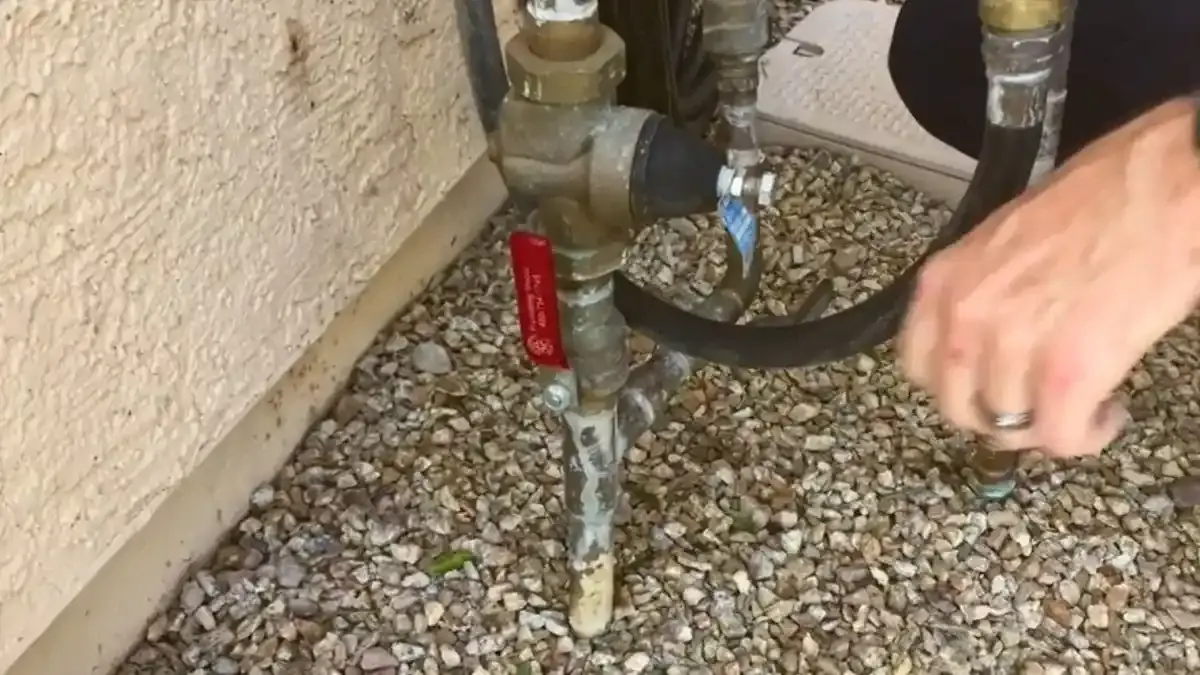
For a burst pipe, shut off the main water valve immediately. Then open the lowest faucet in the house to drain what is left in the lines, and stay out of any room where water is near outlets, cords or the electrical panel.
Every minute the water runs, more flooring, drywall and belongings get soaked. Closing the main stops the supply, and the faucet drain relieves pressure so the broken section stops spraying.
After that, move valuables, take photos and call a licensed plumber with a 24/7 emergency line. The steps below explain each move and what comes after. A permanent repair should follow the California Plumbing Code, which is based on the Uniform Plumbing Code (UPC), and plumbers use standards like it to judge whether a temporary clamp is enough.
Do these in order while water is running
Speed matters, but so does safety. Follow this order.
- Shut off the main water valve. Turn a gate valve clockwise until it stops, or turn a ball valve handle a quarter turn so it sits across the pipe.
- Open the lowest faucet in the house, such as a laundry sink or an outdoor hose bib, to drain the line.
- If water is near electricity, stay out of the area. Shut off power at the breaker only if the panel is dry and you can reach it without stepping in water.
- Turn off the water heater power or gas control if the burst is near it, so the tank does not run dry and overheat.
- Move rugs, furniture legs and anything valuable away from the wet area.
- Call a licensed plumber and say which room the water is in and that the main is off.
Where the main shutoff usually is
In most homes the main shutoff is where the water line enters the house. Common spots are the garage wall, a utility closet, a basement or crawlspace near the front, or an outdoor box beside the foundation.
Find yours before an emergency and label it with a tag. If the handle is stiff or frozen with age, a pair of pliers or a wrench can help, but do not force a corroded valve so hard that it breaks.
If the house valve will not close, the next option is the meter shutoff. That is where the split between utility and customer responsibility comes in, covered in the local note below.
Power and gas safety near a burst pipe
Water and electricity do not mix. If the burst is in a wall or ceiling with outlets or fixtures in the path, expect water to reach wiring. Keep people out and do not touch switches while standing on wet floors.
If you smell gas at any point, leave the building, call 911, then call PG&E at 1-800-743-5000. Avoid anything that could spark, including matches and flashlights, and call a plumber only after you are safe.
Document the damage before you clean up
Your photos and notes shape any insurance conversation.
- Photograph the burst section, the wet floors, walls and ceilings, and any damaged belongings.
- Record a short video that walks through each room so the scope is clear.
- Write down the time you noticed the leak and when you shut off the water.
- Keep damaged items until your insurer has had a chance to see them, if it is safe to do so.
- Save receipts for emergency repairs, fans, dehumidifiers and any extra living costs.
Many homeowner policies cover sudden water damage but not slow leaks or the failed pipe itself, so read your policy and ask your insurer. Document first, then call.
Temporary fixes versus a real repair
A clamp or tape can slow a leak. It does not fix a pipe. This table shows the difference.
| Option | What it does | Limit |
|---|---|---|
| Pipe repair clamp. | Seals a pinhole or small split for a short time. | Stopgap, not a lasting repair. |
| Self-fusing silicone tape. | Wraps a small leak at low pressure. | Only a bridge until a plumber arrives. |
| Cut out and replace the section. | Removes the damaged pipe and fits new pipe. | Needs a licensed plumber and the right fittings. |
| Repipe a run or the whole house. | Replaces failing pipe throughout. | Bigger job, fits older or repeatedly failing pipe. |
Leave the main off until a plumber has cut out and replaced the damaged section, unless you are certain the stopgap holds under pressure.
Why pipes burst
Common causes include freezing, high water pressure, corrosion in older pipe, a failed joint, and physical damage from digging or construction. Galvanized steel and older copper wear from the inside and can fail suddenly.
Freezing is less common in a Mediterranean climate, but cold snaps and uninsulated lines in attics, garages and exterior walls can still split a pipe. Burst lines also follow repeated pressure spikes, such as a failing pressure regulator.
If the burst was not a one-off, a plumber can tell you whether the rest of the pipe is at risk and whether a repiping plan makes sense.
What happens when the plumber arrives
A plumber confirms the main is off, finds the break, and decides whether the pipe can be cut out and repaired or needs replacing along its run. Access matters: a break in an open crawlspace is easier than one in a finished wall.
Once the pipe is repaired, the system is refilled and pressure tested. Drying the structure matters too, since wet drywall and insulation can grow mold if left damp. A water damage company can handle that while the plumber handles the pipe.
Cost depends on the pipe material, where the break is, how much wall or floor must be opened, and whether repair or replacement is chosen. Call for a clear price before work starts. See burst pipe repair and water line repair for more.
Serving homes beyond Lafayette
Our emergency line covers Lafayette and the neighboring towns. If your burst pipe is in Walnut Creek or Orinda, the same steps apply, and we dispatch from Lafayette so drive time varies with traffic.
Whichever town you are in, tell the dispatcher what you have already done, such as whether the main is off and whether any water is near electrical equipment.
Lafayette note: street side versus customer side of the meter
EBMUD serves Lafayette, and its leaks and high bills guide sets out who handles what. EBMUD is responsible for leaks on the street side of the meter, including the meter and its threads. You are responsible for leaks and repairs on the customer side.
That affects your first call. If the water is coming from the meter box or the pipe on the street side, call EBMUD Emergency Dispatch at 1-866-403-2683 and press 1. If water is coming from your pipe past the meter, close your own main and call a plumber.
The meter is usually in a concrete box near the curb with the EBMUD logo on the lid. If it is leaking at the box and you cannot tell which side, call EBMUD first, and then call us for anything on your side.
Burst pipe questions from Lafayette homeowners
Shut off the main water valve. Then open the lowest faucet to drain the lines and stay out of any room where water is near electricity. Call a licensed plumber once the water is stopped.
It lets the water already in the pipes drain out and relieves pressure at the break. A faucet at the lowest point drains fastest.
You can slow a leak with a clamp or self-fusing tape as a temporary measure. A real repair means cutting out the damaged section and fitting new pipe with the right fittings, which is a job for a licensed plumber.
It may cover sudden water damage, but many policies do not cover the failed pipe itself or slow leaks. Read your policy, ask your insurer, and take photos before cleanup.
Call EBMUD Emergency Dispatch at 1-866-403-2683 and press 1. EBMUD handles leaks on the street side of the meter, including the meter and its threads. Leaks on your side belong to you, so call a plumber for those.
Yes. Our emergency line runs 24/7, including nights and weekends. Shut off the main first, then call and tell us what you see.
Still unsure what you are dealing with? Call the 24/7 line and describe it to a dispatcher.
Call (855) 575-2890