
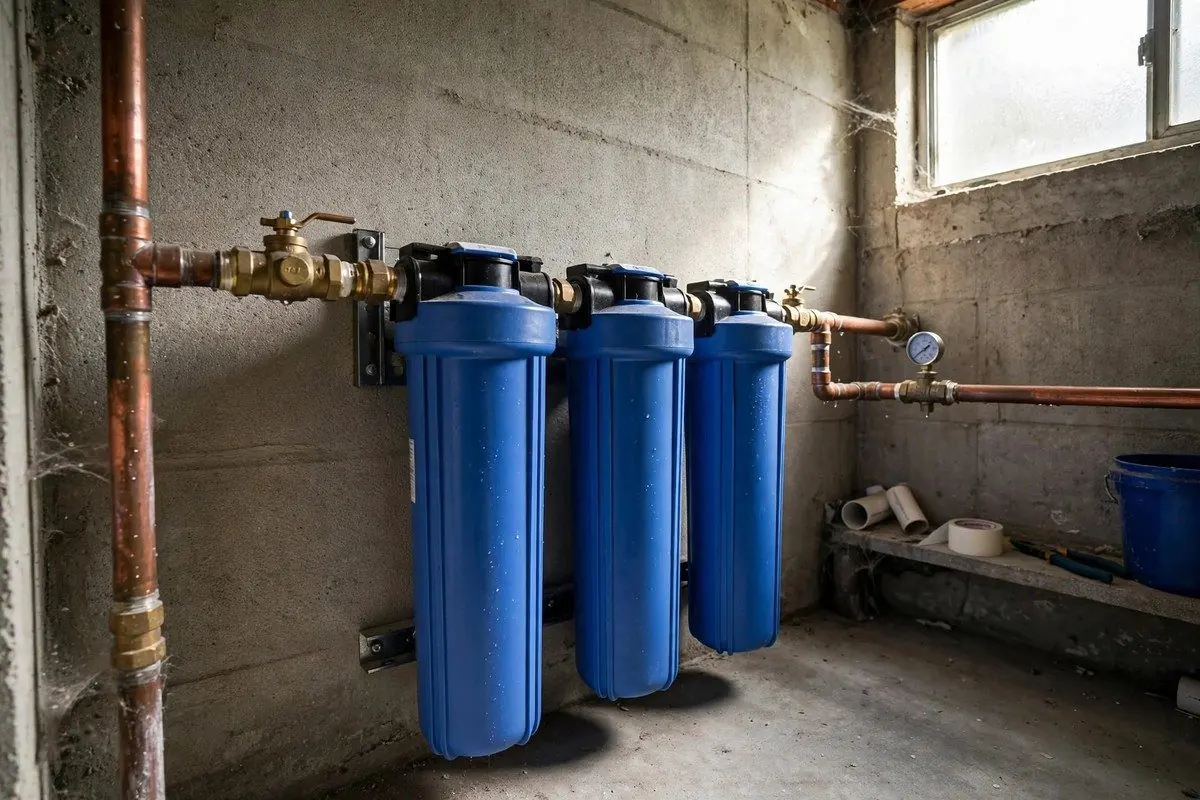
Most homes in Lafayette, CA do not need a water softener for hardness. EBMUD reports that water from its Lafayette treatment plant is very soft, about 16 mg/L or roughly 0.9 grains per gallon, and a salt softener is built to fix hard water you do not have.
That does not mean filtration is pointless. Plenty of people want better taste, less chlorine-type smell, chloramine removal for an aquarium, or clean water at one tap. We are licensed plumbers, and we will tell you plainly whether a system makes sense before you buy one.
We also service existing softeners, brine valves and bypass plumbing for homes that came with one. Bypass valves, drain connections and backflow protection follow the California Plumbing Code, which is based on the Uniform Plumbing Code (UPC), so the install is done to a clear standard.
Read your tap before you buy a system
Spend an hour on this before any salesperson visits. It can save you a system you will never use.
- Read the EBMUD annual water quality report and find the treatment plant that serves your address.
- Note hardness, pH and disinfectant listed for that plant.
- Check for real symptoms in your own house: white crust on faucets, scale in a kettle, spotting on glasses.
- Buy a simple hardness test strip or kit and test a cold tap, because a number on your hands beats a number on a brochure.
- If your water tests soft and you have no scale, a softener will not change much, and you can focus on the taste or filtering goals instead.
What a softener would change here, and what it would not
A salt-based softener swaps calcium and magnesium for sodium or potassium. That matters only when those minerals are high.
| Question | In very soft water | In hard water |
|---|---|---|
| Scale on fixtures and heaters. | Already low | Softener helps a lot. |
| Soap and lather. | Already good | Softener improves lather. |
| Taste and smell. | No change | Little change |
| Chloramine | Not removed | Not removed |
| Salt, regeneration and drain water. | Adds cost and waste. | Worth it for the benefit. |
A softener does not filter out chloramine or improve taste on its own. That job belongs to a carbon filter.
Lafayette water by the numbers
EBMUD says to divide mg/L by 17 to get grains per gallon, which is how 16 mg/L becomes about 0.9. At that level, scale buildup is typically low, so a salt softener usually adds salt, maintenance and drain water without a clear benefit.
Orinda and Walnut Creek plants report similar hardness, at 16 to 18 and 15 to 16 mg/L. The numbers above are for the Lafayette plant, and your address may be served differently, so confirm it in the report.
When filtration still makes sense
These goals are real, and none of them require a softener.
Better taste
A carbon filter at the kitchen tap improves flavor for many people who dislike the taste of treated water.
Aquariums and fish
Chloramine is harmful to fish, so aquarium owners use a conditioner or carbon treatment made for chloramine.
Drinking water at one tap
An under-sink reverse osmosis unit gives a separate faucet for drinking and cooking.
Whole-house sediment and carbon
A cartridge filter at the main catches grit, and a carbon stage reduces taste and odor throughout the house.
Chloramine in plain terms
Chloramine is a disinfectant made from chlorine and ammonia that many water utilities use because it lasts longer in the pipes. EBMUD reports about 2.6 mg/L at the Lafayette plant.
Activated carbon can reduce chloramine when the filter is sized and the flow is slow enough, though performance varies by product, so check the manufacturer's rating. Boiling does not remove it, and it matters for fish tanks and some kidney dialysis, so ask a doctor if that applies to you.
Pick a setup by goal
| Your goal | Likely fit | What to know |
|---|---|---|
| Cleaner drinking water. | Under-sink RO or carbon. | Needs a drain connection for RO and cartridge changes. |
| Better taste at every tap. | Whole-house carbon | Sized by flow rate and replaced on schedule. |
| Sediment or grit. | Whole-house sediment cartridge. | Pressure drop rises as it fills. |
| Chloramine for fish. | Conditioner or dedicated carbon. | Follow the aquarium maker's guidance. |
| Scale and soap problems. | Test first, then decide. | Rare in soft water. |
| You already own a softener. | Service it or bypass it. | See the next section. |
Servicing a softener you already own
Some homes came with a softener, and some owners are unsure they need it.
- Check the brine tank for salt bridges, mushy salt or a gummed-up bottom.
- Ask us to check the control valve, resin and bypass plumbing if the unit cycles constantly or leaks.
- Test the water after the softener. If it is no different from before, you may not need it running.
- Switch it to bypass or replace with a filter if the report and tests show soft water, and consider salt consumption and drain discharge.
- Replace worn valves, hoses and fittings only after confirming the unit is worth keeping.
Cost factors for filters and softener service
Price depends on the system type, flow capacity, filter media, whether a drain line or electrical outlet is needed, and how easy the access is. Under-sink units are simpler than whole-house systems, which need cuts into the main line, bypass valves and room for the tanks.
Ongoing costs matter too: cartridges, membranes, salt and replacement schedules. Insurance rarely covers optional treatment systems, so plan for the full cost. Call for a clear price before work starts, and we will list the parts and the ongoing upkeep so nothing surprises you.
Install, hot water and fixtures nearby
A new filter system is a plumbing installation, so the same permit and code questions apply, and you should ask the Lafayette building department what applies. If scale does appear on your heater, see water heater installation for sizing, or call about faucet repair if a faucet is clogged by debris.
We serve Lafayette and nearby towns including Moraga. We do not state which water supplier serves every address, so check your own bill or ask your utility.
Softener and filter questions we hear
Probably not for hardness. EBMUD reports about 16 mg/L at its Lafayette plant, which is very soft. Test your tap and read the EBMUD annual report to confirm for your address.
It is a disinfectant used to keep water safe in the pipes. Activated carbon can reduce it, and aquarium owners should use a chloramine-safe conditioner.
For drinking and cooking water at one tap, many people like it. It needs a drain line and membrane changes, and it wastes some water.
System type, capacity, drain and electrical needs, and access. Ongoing cartridge or salt costs matter too. Call for a clear price before work starts.
Test the water before and after. If hardness is already low, the softener adds salt and maintenance without much benefit, and bypassing it may make more sense.
Usually not. Taste and chloramine are handled by carbon filtration, not a salt softener.
Still unsure what you are dealing with? Call the 24/7 line and describe it to a dispatcher.
Call (855) 575-2890