
Sewage rising in a floor drain, a tub that fills when the toilet flushes, or every toilet gurgling at once: this is the main sewer line, and it is urgent. Our 24/7 emergency line is open for it, and until we arrive you can stop all water use and keep people out of the lowest room.
Sewer line cleaning in Lafayette, CA means clearing the lateral from your house out to the Central San main, usually from the cleanout, using a heavy cable with cutting heads or a hydro jet.
The lowest fixture in the house is almost always the first to show a blockage, because that is where the backed-up waste finds the shortest way out. Below is what to do, what we do, and what a sensible cleaning schedule depends on. Any cleanout added during the visit follows the California Plumbing Code, which is based on the Uniform Plumbing Code (UPC) and Central San guidelines for laterals.
Sewer backup: what to do first
Act in this order while you wait for us:
- Stop using water everywhere: no flushing, showers, laundry or dishwasher.
- Keep children and pets out of any room with sewage on the floor, and avoid touching it.
- If water is near outlets or appliances, stay out of that area.
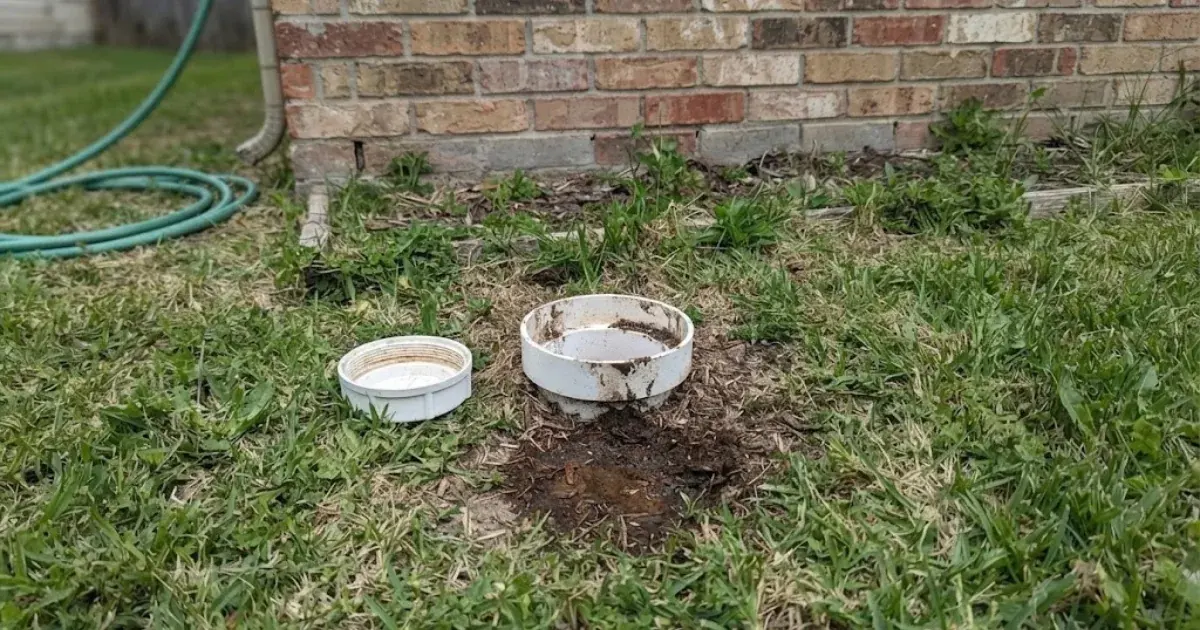
- Find the sewer cleanout, a capped pipe usually near the house or at the property line, but do not open it if sewage is under pressure.
- Pull up rugs and move stored boxes off the floor near the lowest drain.
- Call and tell us which drains are backing up and where the cleanout is.
How a main line tells you it is blocked
A blocked main behaves differently from a clogged sink. Several fixtures misbehave together: toilets bubble when the shower drains, the washer drain overflows, and a floor drain in the garage or basement takes on water.
Because gravity pushes everything toward the lowest opening, a basement shower or a ground-level floor drain will usually overflow before an upstairs bathroom does. Gurgling means air is being displaced by a column of backed-up water, and it often comes hours or days before the first overflow.
A single slow drain is more likely a branch clog, which our drain cleaning team handles.
What cleaning the main line involves
Most jobs follow the same arc, whatever the cause.
Open the cleanout
We check the cap on the cleanout and relieve any pressure before the cable goes in.
Cut and clear
A heavy cable with a root-cutting head opens the line. Sometimes a jet follows to wash the pipe wall.
Camera pass
A push camera confirms the line is open and shows roots, offsets or cracks.
Clean up and advise
We protect floors, rinse the area, and explain what the camera showed and what comes next.
Central San facts every Lafayette owner should know
Central San serves Lafayette, Moraga, Orinda, Walnut Creek, Pleasant Hill and other communities. Under its guidance, the property owner owns the entire lateral from the house to the district main, including the stretch under the sidewalk or street.
Central San also reports that tree root intrusion is the leading cause of sewer backups. Routine cleaning does not need a permit, but all other lateral work does, and digging in the street or public right of way requires a city encroachment permit. Read the Central San home guide or call their permit counter before any digging.
Root cutting, and why roots return
Roots seek moisture and nutrients, and a sewer joint leaks both. Hair-thin roots slip through a joint, then thicken into a mat that catches paper and grease.
Cutting restores flow immediately, but it does not seal the joint. That is why the same line may clog every year or two. If the camera shows a crack or an open joint, repair is the real cure, and our sewer line repair page lays out the choices.
Chemical root killers rarely reach the whole mat and can harm lining or older pipe, so we advise asking us before using one.
Setting a cleaning schedule that fits your line
We do not use a fixed calendar. These factors decide how often a lateral should be cleaned:
- Trees or large shrubs near the lateral and how mature they are.
- Pipe material and condition, which the camera can show.
- Prior root cutting or backups on the same line.
- Number of people in the house and how much grease reaches the kitchen drain.
- Low spots or sags where waste settles.
- Whether the cleanout is accessible and in good shape.
Comparing what we use on a main
| Situation | Tool | Result |
|---|---|---|
| First-time backup, no history. | Heavy cable with a cutting head. | Opens the line quickly. |
| Grease or scale lining the pipe. | Hydro jet | Cleans the wall. |
| Roots confirmed on the camera. | Root cutter, then camera. | Shows entry points. |
| Cable keeps hitting a stop. | Sewer inspection | Finds the break or offset. |
Neighbors we reach for the same call
Homes in Pleasant Hill and across Lamorinda share the same Central San sewer system and the same ownership rules. A backup there follows the same steps: stop water, find the cleanout, call. If your block has several homes backing up at once, the district main may be the problem, and Central San should hear from you at (925) 228-9500.
What affects the price of sewer cleaning
Price follows lateral length, cleanout access, how dense the roots are, whether a jet is added, and the hour of the call. A line with a clean, reachable cleanout is quicker than one needing access through a vent or a toilet.
Many homeowner policies cover sudden water damage but not the cleaning or slow seepage, so read your policy and ask your insurer. Call for a clear price before work starts.
Sewer cleaning questions from Lafayette homes
Yes. Our 24/7 line takes sewer backup calls at any hour, and we schedule same-day appointments when available for slow lines that are not yet overflowing.
Look for a capped pipe, often white or black, near the house, a side yard, or the property line. If you cannot find one, tell us on the call and we will help locate it.
Under Central San guidance the owner is responsible for the whole lateral from the house to the district main. If the district main itself is backed up, report it to Central San.
Routine cleaning does not need a Central San permit. Other lateral work does, and street work needs a city encroachment permit. Ask the city building department when unsure.
A small hand auger at the cleanout is possible for a minor clog, but a main line with roots needs a powered machine. Sewage is also a health hazard, so keep skin contact to a minimum.
Length, access, root density, whether a jet is needed, and time of day. We give a clear price before work starts.
Still unsure what you are dealing with? Call the 24/7 line and describe it to a dispatcher.
Call (855) 575-2890