
A slow draining bathroom sink that is not fully clogged is almost always a partial blockage in the first few feet of pipe. The usual culprits are hair and soap wrapped around the pop-up stopper, sludge in the P-trap, or a vent that is not letting air in behind the water.
This guide helps Lafayette homeowners sort out which one it is, what is safe to do yourself, and how to tell a single-sink problem from a main line problem. If several drains in the house are slow at once, skip ahead to the lateral section.
Have a bucket, an old towel, and a flashlight ready. Most fixes need no purchased parts. Trap and vent layouts follow the California Plumbing Code, which is based on the Uniform Plumbing Code (UPC), which is why a vent problem can mimic a clog.
Why a sink drains slowly instead of stopping
Water moves slowly when something narrows the pipe but does not seal it. Hair catches on the stopper crossbar, soap and toothpaste bind it into a mat, and the mat grows until only a trickle passes.
The same buildup forms in the curved P-trap below the sink, where heavy sludge settles. Farther down, a partial clog in the branch line behaves the same way. A sink may drain fine for a minute and then back up as the basin empties.
Noting how the sink behaves helps. A gurgle suggests a venting problem. A sink that holds water but eventually empties suggests a partial clog nearby.
The pop-up stopper: the cheapest fix first
Most slow bathroom sinks are fixed at the stopper. Pull it and clean it before anything else.
- Put a towel and bucket under the sink and look at the pivot rod behind the drain pipe.
- Unscrew the retaining nut on the pivot rod by hand, then slide the rod out of the stopper.
- Lift the stopper out and wipe off the hair and gray film. A bent wire or a plastic drain-cleaning strip pulls out what remains.
- Reinstall the stopper and rod, run hot water for a minute, and time how fast the basin drains.
- If it is still slow, move on to the P-trap.
P-trap cleanout without making a mess
The P-trap is the U-shaped pipe under the sink. It holds a small plug of water that blocks sewer gas, and it collects debris. Cleaning it takes about ten minutes.
- Place a bucket under the trap and loosen the two slip nuts by hand. Use channel-lock pliers only if they are stuck.
- Lower the trap, empty it into the bucket, and scrub it out with a bottle brush.
- Check the pipe stub going into the wall with a flashlight. Remove any buildup you can reach.
- Reassemble with the washers seated flat and snug the nuts by hand, then a quarter turn more.
- Run water and check every joint for drips.
Partial clog or vent problem: how to tell
Where the clog lives changes the fix. Use this table to narrow it down.
| What you notice | Likely cause | Next step |
|---|---|---|
| Slow only after stopper is in. | Stopper buildup | Clean the stopper. |
| Slow with stopper removed. | Trap or branch clog. | Clean the P-trap. |
| Gurgling, then slow drain. | Vent partly blocked. | Call a plumber. |
| Sink and tub slow together. | Shared branch line clog. | Snake or jet the branch. |
| Toilet gurgles when sink drains. | Main or lateral issue. | Call, and stop using water. |
| Smell with slow drain. | Dry trap or sewer gas path. | Run water, then call if it stays. |
A vent problem can mimic a clog. If cleaning the stopper and trap changes nothing, stop guessing.
Sink problem or main line problem?
A sink problem stays at one fixture. A main line or lateral problem shows up in more than one place.
- Run the shower or tub and flush the toilet. If the sink gurgles or rises, the shared line is restricted.
- Check the lowest drains in the house, such as a basement or first-floor shower. Backups show up there first.
- Notice whether slow drains cluster after laundry day or heavy use, which points to a partly blocked main.
- If two or more fixtures are slow, treat it as a main line issue and read the next section.
What is safe to do yourself
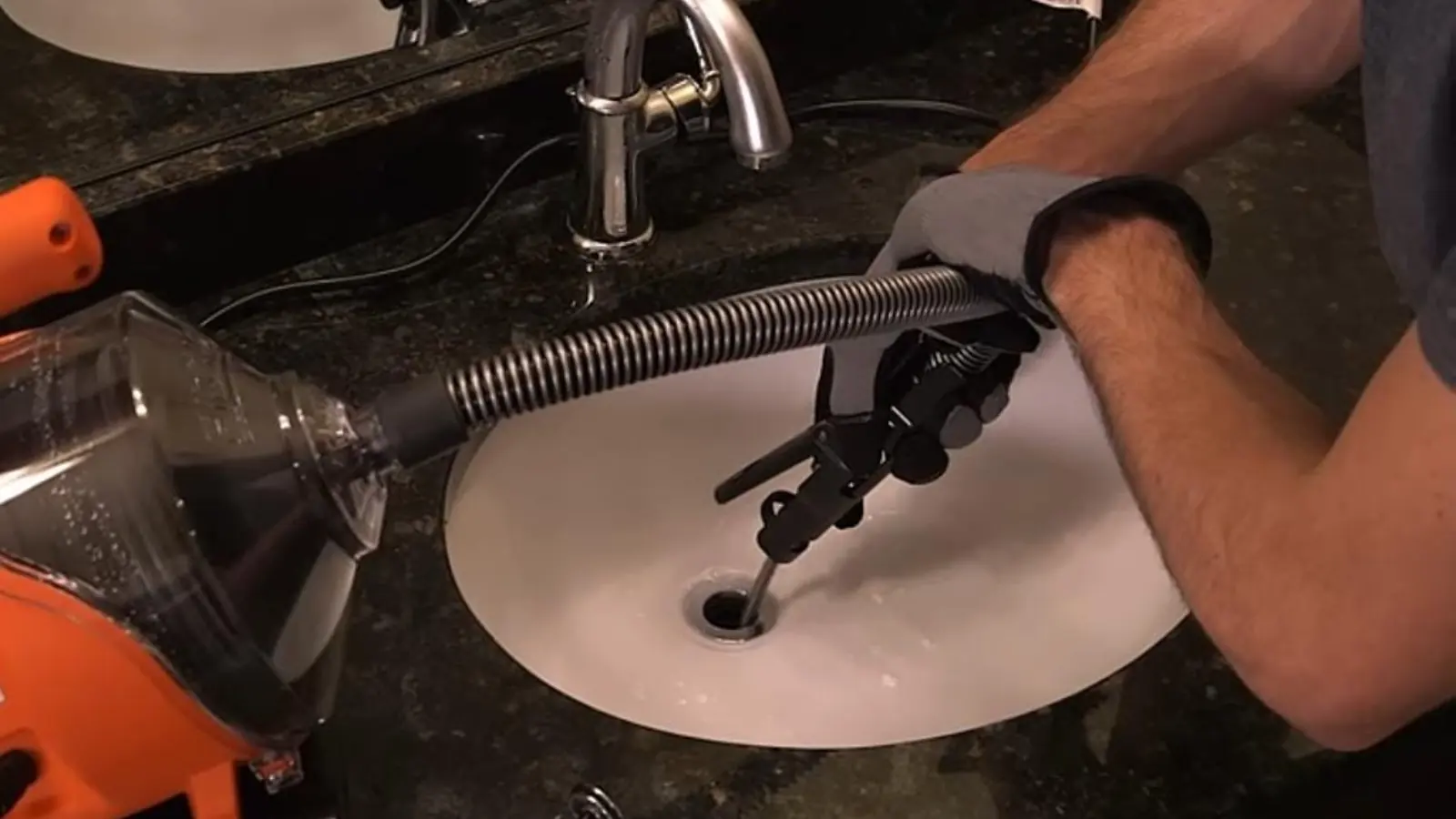
Cleaning the stopper, emptying the trap, and using a plastic drain strip are all safe. A hand-cranked drain snake can also work on a bathroom sink, but feed it slowly. Forcing it can scratch porcelain or push a clog deeper.
Skip the harsh chemical drain openers, especially on older pipes. They can sit in a partly blocked line, heat up, and damage old metal or plastic joints, and the standing liquid is a hazard when a plumber later opens the trap. A kettle of hot water and a mild dish soap flush is gentler.
Avoid plungers on a sink with an overflow unless you block the overflow hole with a wet rag first. Otherwise the pressure escapes there.
When it is the sewer lateral
The lateral is the pipe that carries everything from your house to the main in the street. If every drain is slow, the toilet gurgles, or water backs up in a low shower, the restriction is probably past your branch lines.
Roots are the most common cause. A camera inspection shows exactly where the blockage is, and a cable machine or hydro jetting clears it. Do not run laundry or long showers while you wait.
For a stubborn blockage, drain cleaning from the cleanout is usually the right first step. Find your cleanout before you call, since it saves time on arrival.
What a plumber does and what affects the price
For a partial clog a plumber starts by locating it. That may be a snake from the sink, a cable from the cleanout, or a camera run. The method depends on where the sink sits relative to the main.
Price depends on access, how many fixtures are affected, whether the line needs a camera, and whether the clog is in a branch or the lateral. A stopper swap is a different job from a root-filled lateral.
Many homeowner policies cover sudden water damage but not slow leaks or the failed pipe itself, so read your policy and ask your insurer. Call for a clear price before work starts.
Lafayette note: who owns the lateral
In Lafayette, Central San handles the district sewer main, but the property owner owns the whole lateral from the house to that main, including the stretch under the sidewalk or street. If several drains slow down at once, the blockage is yours to clear, so it helps to know where your cleanout is before trouble starts.
Central San says root intrusion is the leading cause of sewer backups. A slow sink that returns every few weeks, with gurgles in other fixtures, is a reason to schedule a camera look instead of repeating chemical treatments.
All lateral work except routine cleaning needs a Central San permit, and digging in the street or public right of way needs a city encroachment permit. The Central San home guide explains what homeowners should know. Ask the Lafayette building department about anything beyond that. The same lateral rules apply if you call us from Pleasant Hill or Moraga, since Central San serves both.
Slow sink questions in Lafayette
The restriction is probably in the P-trap or the branch line. Clean the trap next, and if the sink still drains slowly with the stopper out, a snake or camera is the next step.
Yes. If the vent is partly blocked, air cannot replace the water leaving the pipe, so drainage slows and you may hear gurgling. Vents run through the roof, so this is a job for a plumber, not a ladder.
We advise against it. Harsh openers can damage old metal and plastic joints and leave dangerous standing liquid in the pipe. Mechanical cleaning is safer and more reliable.
The property owner owns the lateral from the house to the Central San main, including the part under the sidewalk or street. Central San covers the main. Ask Central San if you are unsure where the line ends.
Call if more than one fixture is slow, if the toilet gurgles, or if you have cleaned the stopper and trap with no change. We can find the blockage and give a clear price before work starts.
Still unsure what you are dealing with? Call the 24/7 line and describe it to a dispatcher.
Call (855) 575-2890