
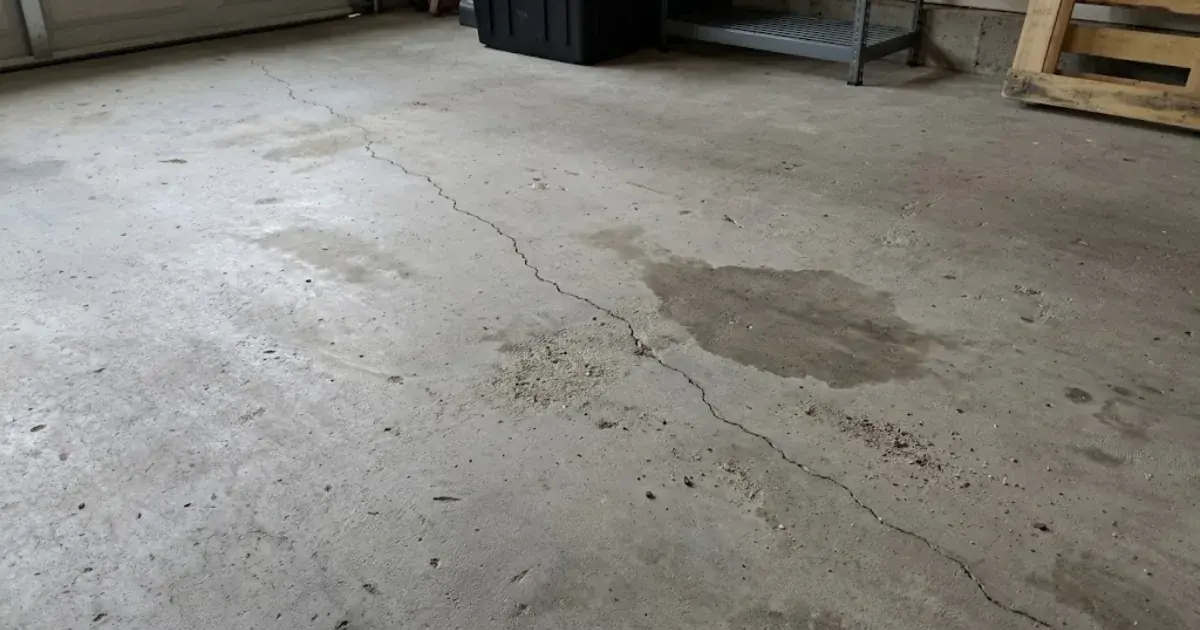
The signs of a slab leak are usually a warm spot on the floor, the sound of running water when nothing is on, a water meter that keeps moving, and a bill that climbs for no reason. Damp carpet, a musty smell and new cracks can follow.
A slab leak is a leak in a pipe that runs in or beneath a concrete foundation. Because the pipe is buried, you often see the effects before you see the water. That is why the clues matter and why a simple meter test is so useful.
Read the signs below, check the look-alikes, then run the test to confirm. If it points to a slab leak, a plumber with leak detection tools can locate the exact spot. Repairs after a slab leak follow the California Plumbing Code, which is based on the Uniform Plumbing Code (UPC), and a plumber can explain which standards apply.
Seven signs water may be escaping under the floor
One sign alone proves little. Two or three together are worth a test.
- A warm or hot patch on a tile, wood or laminate floor, often from a leaking hot water line.
- The sound of running or hissing water when every fixture is off.
- Damp or soggy carpet, or a floor that feels cold and wet in one area.
- A musty smell or mildew near baseboards, with no obvious source.
- A water meter that moves when all water is off.
- A bill that rises month after month without a change in use.
- New cracks in walls, floors or tile, or baseboards pulling away from the wall.
Warm spots and the sound of water
The most distinctive sign is heat. A hot water line leaking under the slab warms the concrete above it, and you can feel it in bare feet. Walk the house in the morning before the sun heats the floor and compare spots.
Sound is the other giveaway. In a quiet house, stand in the hallway and listen for a faint hiss or the pulse of flowing water. A water heater refilling after a draw can make a similar sound, so listen when no one has used hot water for a while.
Warm floors can also come from a radiant heating system, so know what your home has before you worry.
Damp flooring, mildew and cracks
When water escapes under a slab it can rise through cracks and soak flooring from below. Carpet pad feels wet or smells sour, wood floors cup or buckle, and grout lines darken.
A musty smell near baseboards suggests moisture is being fed from below. Cracks in walls and floors can come from foundation settling too, so treat cracks as a supporting clue, not a verdict.
Look for patterns. Several symptoms in the same area of the house point to a single pipe run. Symptoms scattered across the house point to something else.
False alarms that look like slab leaks
Plenty of ordinary problems mimic these signs. Rule them out first.
| What you noticed | Look-alike cause | How to tell |
|---|---|---|
| Warm floor spot. | Radiant heat or sun through glass. | Spot moves with the day or system. |
| Running water sound. | Water heater refilling, ice maker. | Stops when the appliance stops. |
| High bill | Irrigation, toilet leak, seasonal use. | Dye test and irrigation off. |
| Musty smell | Humid bathroom, plumbing trap drying out. | Run the trap, ventilate. |
| Cracks in walls. | Normal settling | Check for moisture with the other signs. |
If the look-alikes do not explain what you see, move on to the meter test.
Confirm it with a meter test
Your water meter is the best confirmation tool you own. The process follows EBMUD guidance and takes under an hour.
- Turn off every faucet, appliance and irrigation zone in and around the house.
- Open the meter box near the curb and look at the leak indicator. If it moves, water is leaving the system.
- If it does not move, mark the dial with a toothpick, pin or photo and wait half an hour with no use.
- Next, close the houseline valve, mark the dial again and wait another half hour.
- If the dial moved with the houseline valve closed, the leak is in the line between the meter and the house. If it did not, the leak is inside the home, which is where a slab leak would sit.
A moving dial plus the signs above makes a slab leak more likely. A still dial with a closed houseline valve suggests the leak is in a fixture rather than the pipes under the floor.
Check what kind of foundation your house has
Homes in this area do not all share one foundation type. Some sit on a concrete slab, some on a raised foundation with a crawlspace, and some on a mix, such as a slab in one wing and a crawlspace in another.
Before you assume a slab leak, check which applies to you. If you have a crawlspace, a plumber can often see and reach the pipe directly, which changes both the diagnosis and the repair.
What happens after you suspect a slab leak
A plumber starts by shutting off the water and confirming the leak with the same meter and pressure checks. Then acoustic listening, thermal imaging or tracer gas narrows the location to a small area.
Once the spot is found, there are three main paths. Spot repair means opening the slab above the leak and fixing that section. Rerouting means abandoning the leaking pipe and running a new line through walls or the attic. Repiping replaces the failing system when several leaks or old pipe point to a wider problem.
Each option has trade-offs in cost, disruption and how long it lasts. For the details, see slab leak repair and repiping.
Cost factors and insurance
Cost depends on the leak's depth and location, the floor finish above it, the pipe material, and whether the fix is a spot repair, a reroute or a repipe. Flooring that must be removed and replaced adds to the total.
Many homeowner policies cover sudden water damage but not slow leaks or the failed pipe itself, so read your policy and ask your insurer. Some policies cover the cost of accessing the leak, so ask about that too.
Call for a clear price before work starts, and ask whether detection and repair are quoted together. We cover homes in Walnut Creek and Pleasant Hill as well as Lafayette.
Lafayette note: EBMUD meter test to rule a leak in or out
EBMUD supplies Lafayette, and its leaks and high bills guide gives the steps used above. The meter is usually in a concrete box near the curb with the EBMUD logo on the lid. A leak indicator that moves with everything off means water is going somewhere, so it is worth finding out before floors are opened.
The pin test and houseline test split the problem into pieces. A dial that moves after 30 minutes with the houseline valve closed points to the pipe between meter and house. A dial that stays still points inside the home. That answer helps a plumber decide whether to bring a pipe locator or a slab listening kit.
If the leak is on EBMUD's side of the meter, call EBMUD Emergency Dispatch at 1-866-403-2683 and press 1. Anything on the customer side belongs to you, so it is a plumber's call.
Slab leak questions from Lafayette homeowners
The earliest signs are usually a warm patch on the floor, a moving water meter with everything off, and a bill that keeps climbing. Sounds of running water in a quiet house and a musty smell often follow.
Yes. A very small leak may not move your bill much at first. A warm floor, a faint hiss or a meter that creeps with everything off can show up before the bill does.
No. Radiant heat, sun through large windows and ducting under the floor can all warm a spot. If the warmth is along a hot water pipe route and comes with other signs, a test is justified.
No. Homes in the area sit on a mix of foundation types, including slab and raised foundations. Confirm what yours has before assuming a slab leak, since a crawlspace changes how a plumber reaches the pipe.
Run the EBMUD meter checks. Turn everything off and watch the leak indicator, then try the pin test and the houseline test. If the dial moves with the houseline valve closed, the leak is outside the house. If it does not, it is inside, and a plumber can locate it.
Treat it as urgent. Shut off the main if you can, or the house supply, and call. A leak can wet flooring, undermine the soil and run up the bill each day. We have a 24/7 line for active leaks.
Still unsure what you are dealing with? Call the 24/7 line and describe it to a dispatcher.
Call (855) 575-2890