
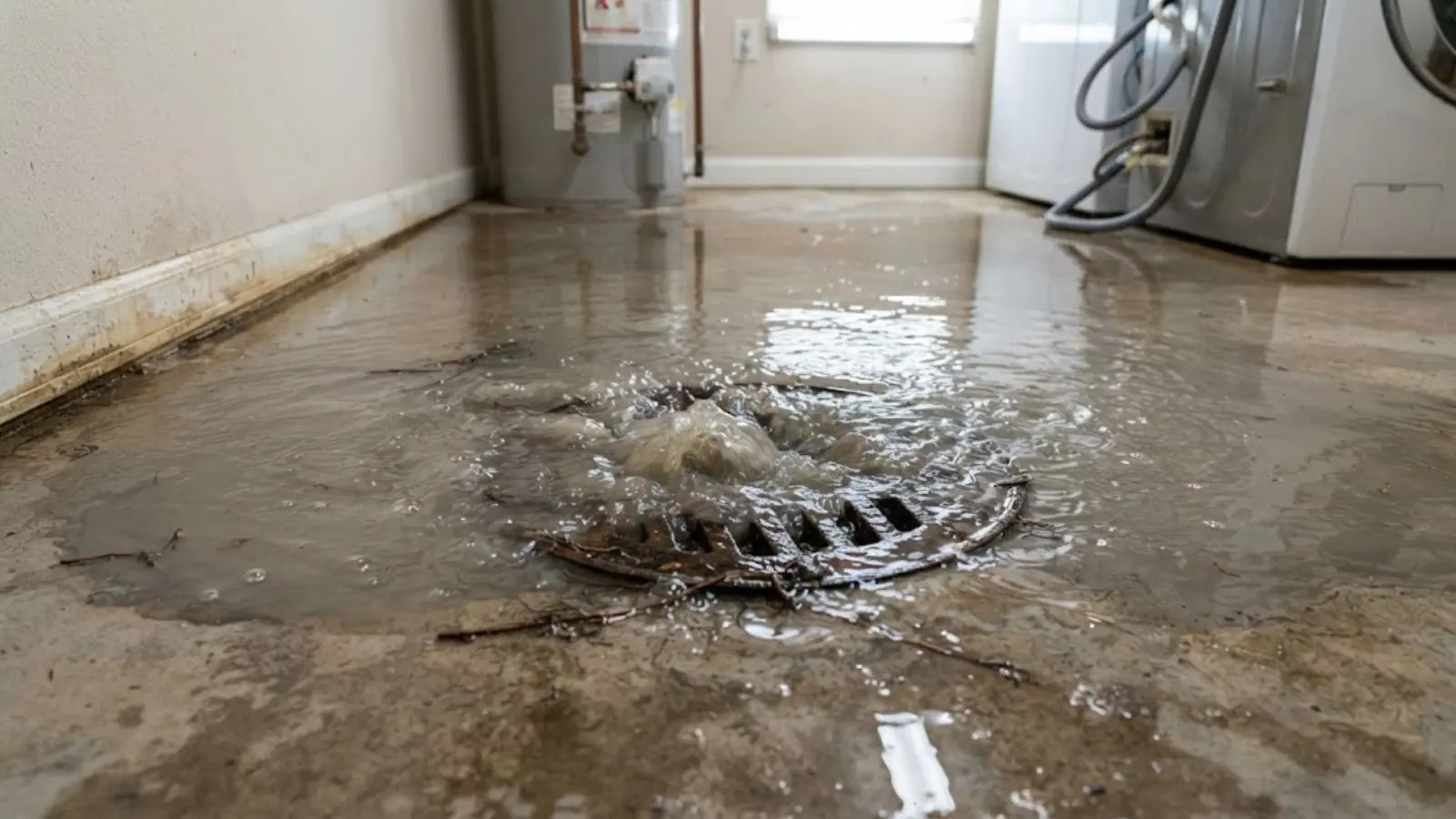
If sewage is coming up through a floor drain, tub or toilet, stop using water in the house right now. Every flush, shower and washing machine load pushes more wastewater toward the same blocked line and into your home.
Next, keep people and pets out of the affected rooms, turn off power to any wet area you can reach safely, and find your cleanout. Then call a licensed plumber. A backup is a health hazard as well as a mess, and it rarely clears on its own.
The sections below walk through what to do in order, what to avoid, how to document the damage, and who is responsible for which part of the line. Central San guidelines and the California Plumbing Code, which is based on the Uniform Plumbing Code (UPC) govern cleanouts and lateral repairs, which is why permits matter.
The first ten minutes: your quick action list
Work through these in order. Each one reduces damage or protects someone.
- Stop all water use. No flushing, no showers, no dishwasher, no laundry.
- Move children and pets out of the wet area. Sewage water carries bacteria, so nobody should wade through it or touch it bare-handed.
- If the water is near outlets, appliances or the panel, do not step into it. Shut off power to that area at the breaker only if the breaker is dry and you can reach it without standing in water.
- Open windows if the smell is strong, and keep the HVAC fan off so it does not push odor through the house.
- Locate the sewer cleanout, usually a capped pipe outside the house or in a garage or crawlspace, but do not open it yet.
- Call a licensed plumber with a 24/7 emergency line.
Why it backs up in the first place
Most backups come from a blockage in the main sewer line, not a single fixture. Roots entering joints, grease buildup, flushed wipes, a broken or offset pipe and a bellied section that holds water can all stop flow.
A clue that the main line is blocked: more than one drain backs up, and the lowest drain in the house shows it first. A single slow sink usually points to a local clog instead.
Because the water has nowhere else to go, it comes out of the lowest opening, often a shower, tub or floor drain.
Electrical safety around a flooded area
Wastewater conducts electricity, and a flooded basement or crawlspace can hide energized outlets, cords and appliances. Never touch a switch, plug or panel while standing in water.
If the panel is in the wet area or you are unsure, stay out and have the utility or an electrician handle shutoff. If you smell gas at any time, leave the building, call 911, then call PG&E at 1-800-743-5000 before you call a plumber.
What not to do with a sewer backup
Some well-meant fixes make things worse.
- Do not pour chemical drain openers into a backed-up line. They sit in standing water, can burn skin, and create a hazard for the plumber who has to work in it.
- Do not plunge or snake a main line yourself with a toilet plunger. A plunger moves wastewater, not a root mass, and can splash contaminated water.
- Do not keep running water to see if it clears. It adds volume to a line that is already full.
- Do not open the cleanout cap without protection if the line is under pressure, since wastewater may flow out quickly.
- Do not clean up contaminated materials with a regular shop vac or bare hands.
A licensed plumber can clear the line with a cable machine or hydro jetting, and then use a camera to see why it blocked. See sewer line cleaning and hydro jetting for how each works.
Document the damage before you clean
Take photos and short videos of the backup, the water line on walls, damaged flooring, and any belongings that got wet. Wide shots show scope, and close-ups show detail. Note the time it started and the drains affected.
Keep damaged items until your insurer has seen them if you can do so safely. Save receipts for the plumber, cleanup and any hotel stay.
Be honest with yourself about coverage. Many homeowner policies exclude sewer or drain backup unless you added a water backup endorsement, and those endorsements often carry a low limit. Read your policy and ask your insurer what applies.
Cleanout access: find it before the plumber arrives
The cleanout is a capped pipe that gives direct access to the sewer line. It is often near the foundation, in a side yard, or near the property line. If you know where it is, the plumber can start sooner.
Clear the area around it, but leave the cap on until the plumber is ready. Opening it can relieve pressure and also release wastewater, so do it only if you are prepared for a flow.
If you cannot find it, tell the plumber when you call. Many homes have more than one.
Who owns what: house, lateral and main
Knowing who owns each part helps you decide who to call.
| Part of the system | Who owns it | Who to call |
|---|---|---|
| Fixtures and drain lines inside. | You | A licensed plumber. |
| Sewer lateral, house to main. | You, the whole length. | A licensed plumber. |
| Cleanout and cap. | You | A licensed plumber. |
| District main in the street. | Central San | Central San main line. |
If the main in the street is the problem, the plumber will tell you after the camera shows where the blockage sits.
When to call and what happens next
Call as soon as sewage appears. Waiting lets water soak into flooring and drywall, and the smell and bacteria spread. Tell us which drains are affected, whether anything has been done, and where your cleanout is.
A plumber will usually clear the blockage first, then run a camera to find the cause. If roots or a collapsed section are the problem, the camera shows whether you need spot repair, lining or a sewer line repair.
Cost depends on blockage location, line depth, access and whether a repair is needed. Ask for a clear price before work starts, and for the camera footage. We serve Orinda and Moraga as well as Lafayette, 24/7.
Lafayette note: Central San, roots and permits
Central San, the Central Contra Costa Sanitary District, serves Lafayette's sewers. Its home guide says the property owner owns the entire lateral from the house to the district main, including the stretch under the sidewalk or street. That means a blockage anywhere on that run is your repair, even if the pipe is out in front of the property.
Central San names root intrusion as the leading cause of sewer backups. If your line has had roots before, expect them to return, so ask about a camera inspection and a regular cleaning schedule rather than a one-time clear.
All lateral work other than routine cleaning needs a Central San permit, and digging in the street or public right of way needs a city encroachment permit. The Central San permit counter is (925) 229-7371 and the main line is (925) 228-9500. Ask them before a repair begins.
Sewer backup questions from Lafayette homeowners
Stop all water use, move people and pets out of the wet area, avoid electrical hazards, and call a licensed plumber. Do not use chemical openers or keep flushing. If you smell gas, leave and call 911 first.
No. Chemical openers sit in standing wastewater, can burn skin and eyes, and do not break up tree roots. They also make it more dangerous for the plumber to work on the line.
It depends on how much sewage reached the living space. Keep children and pets out of wet rooms, stay out of any water near electricity, and consider staying elsewhere if the flooding is large or the smell is strong.
Maybe. Many policies exclude drain or sewer backup unless you added an endorsement, and the limit can be low. Read your policy and ask your insurer, and document everything with photos before cleanup.
The property owner owns the whole lateral from the house to the Central San main, including the part under the sidewalk or street. Central San handles the main in the street. Lateral work other than routine cleaning needs a Central San permit.
Only if you know where it is and are ready for wastewater to flow out. Most homeowners should leave the cap on and let the plumber open it with the right gear, since pressure can release contaminated water quickly.
Still unsure what you are dealing with? Call the 24/7 line and describe it to a dispatcher.
Call (855) 575-2890