
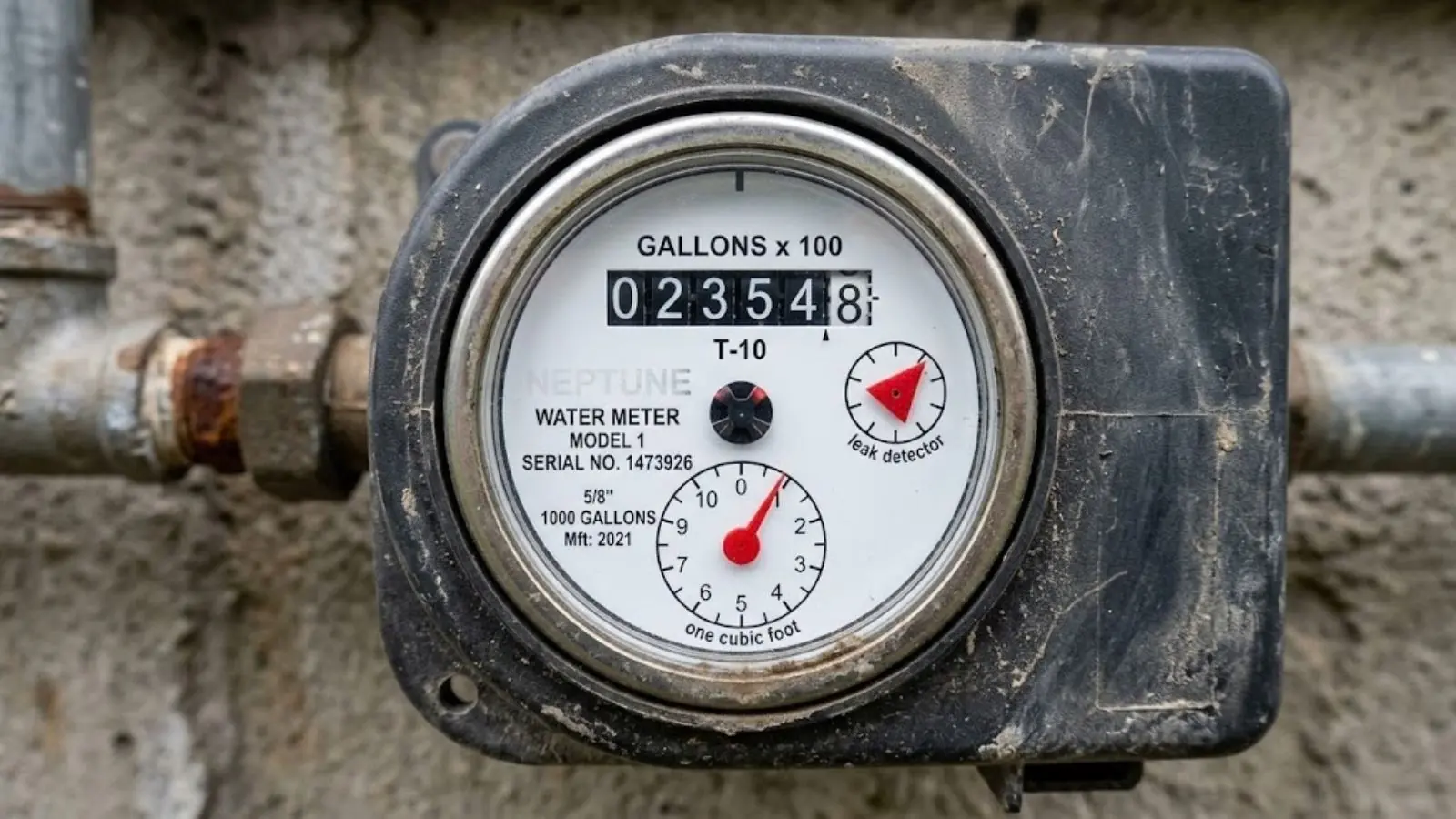
A high water bill with a meter that will not sit still usually means water is escaping somewhere you cannot see. The usual suspects are a silently running toilet, an irrigation valve stuck open, a leaking supply line between the meter and the house, or a leak inside a wall or under a floor.
The good news is that you can sort through these with a dye test, a look at the irrigation controller and two short meter checks. Together they tell you whether the loss is inside the house, in the yard, or in the buried line.
Work through the sections below in order. If the meter is still running at the end, a plumber with leak detection equipment can pinpoint the spot without tearing up your yard. The meter test below follows EBMUD guidelines for finding leaks, so you can run it before calling anyone.
Why a bill jumps when nothing looks wrong
Most bill spikes have a plain cause. A toilet flapper that no longer seals can lose a surprising volume of water over a month, with no puddle and barely any sound. Irrigation is the next big one, especially after a timer reset or a seasonal change.
Less often, the bill reflects a real pipe leak. A slow pinhole in a copper line, a failed fitting at the water heater or a cracked service line can run for weeks before anyone notices.
Behavior matters too. Guests, a new pool fill, a refilled hot tub or a leaky outdoor hose bib can all push use up, so rule out the ordinary before assuming a hidden failure.
Toilets first: the dye test
Toilets cause more hidden loss than any other fixture, and the test takes minutes. Do it for every toilet in the house.
- Lift the tank lid and drop in a few drops of food coloring or a dye tablet.
- Do not flush. Leave the toilet alone for at least fifteen minutes, longer if you can.
- Look at the bowl. If color appears there, the flapper or fill valve is leaking into the bowl.
- Replace the flapper first, since it is inexpensive and the most common culprit. If the color still shows up, the fill valve or flush valve seat may need work.
- Repeat in the other bathrooms, then check that the tank water level sits below the overflow tube.
A toilet repair is often a quick fix, and it can end a month-after-month waste of water.
Irrigation: the leak that waters the lawn
A stuck valve, a cracked riser or a broken drip line can run water through a whole night without anyone noticing. Run each zone by hand and walk the yard looking for geysers, soggy spots and sprinkler heads that keep flowing after the zone shuts off.
Check the controller too. A setting that doubled the run times or added extra start times is an easy mistake and an expensive one. Shutting the irrigation supply and watching the meter is the fastest way to separate yard loss from house loss.
Dry summers in this climate mean landscaping uses a lot of water, so a small irrigation fault shows up quickly on the bill.
Reading the meter: the leak indicator and the pin test
Turn off every faucet and appliance in and around the house, including the irrigation. Then open the meter box and look at the leak indicator, the small triangle or dial that spins when any water moves through.
If the indicator is moving with everything off, water is leaving the system. If it is still, mark the dial with a toothpick, pin or a photo, wait 30 minutes without using any water, and look again.
- Indicator moving: there is a leak somewhere past the meter.
- Indicator still but dial moved after 30 minutes: a slow leak is likely.
- Neither moved: the loss is likely intermittent, such as a toilet or irrigation timer.
The houseline test: inside the house or the buried pipe?
If the meter shows a leak, the next question is which side of the house it is on. This test splits the house from the buried line.
- Find the shutoff valve where the water line enters the house, called the houseline valve.
- Close the valve completely and make sure nothing in the house is drawing water.
- Mark the meter dial and wait 30 minutes.
- Check the dial. If it moved, the leak is probably in the pipe between the meter and the house, which is a job for a plumber.
- If it did not move, the leak is likely inside the home, in a fixture, a supply line or a pipe in a wall.
A leak in the buried line usually needs a locator and, if repair is needed, a water line repair with trenching or a pipe replacement.
What each result usually means
Use this table to turn your test results into a next step.
| What you saw | Likely cause | Next step |
|---|---|---|
| Dye reaches the bowl. | Worn flapper or fill valve. | Replace the part, retest. |
| Meter moves, irrigation off. | Leak past the meter. | Run the houseline test. |
| Moves with houseline valve closed. | Buried line leak. | Call for locating and repair. |
| Still with houseline valve closed. | Leak inside the home. | Check fixtures, call for listening. |
| Meter still, bill high. | Behavior or seasonal use. | Review irrigation, guests, fills. |
Results can overlap, so retest after each repair to be sure the meter is calm.
When it is time to call a plumber
You have done the free checks. Call when any of these apply:
- The meter keeps moving with the houseline valve closed.
- You find damp drywall, warped flooring or a musty smell with no visible source.
- A fixture still leaks after you replaced the part you suspected.
- You hear water running in the walls or slab in a quiet house.
- A visible leak is spraying or flooding. Shut off the main and call right away.
For leaks under the floor, see our notes on slab leak repair, since that path requires locating the exact spot first.
What affects the cost of tracking down the problem
Price depends on where the water is going and how hard it is to reach. A toilet flapper is a simple parts swap. A leak in a buried line may require locating gear, excavation and pipe work.
Access, pipe material and depth all play a part, as does the number of methods needed to confirm the leak. Ask whether detection and repair are priced separately.
Many homeowner policies cover sudden water damage but not slow leaks or the failed pipe itself, so read your policy and ask your insurer. Call for a clear price before work starts. We also serve homes in Walnut Creek and Pleasant Hill with the same process.
Lafayette note: who owns which side of the meter
EBMUD serves Lafayette, and its guide for leaks and high bills splits responsibility at the meter. EBMUD handles leaks on the street side, including the meter and its threads. You are responsible for leaks and repairs on the customer side, so a leak between the meter and the house is yours to fix.
That split decides who to call. If water is leaking on EBMUD's side of the meter, call EBMUD Emergency Dispatch at 1-866-403-2683 and press 1. If the houseline test shows the loss is past the meter, call a licensed plumber instead.
The meter is usually in a concrete box near the curb with the EBMUD logo on the lid. Knowing where yours is, and checking the indicator now and then, makes it easy to confirm which side a problem is on.
High bill questions answered for Lafayette homes
The usual causes are a silent toilet leak, an irrigation valve that stays open, or a slow leak in a buried or hidden pipe. Use the dye test, check the irrigation, and then read the meter with all water off. These three steps find most hidden loss.
Yes, if water is escaping the system, the leak indicator keeps moving even with every tap off. Check toilets and irrigation first. If it still moves after those are ruled out, the leak is in a pipe, which is when a plumber should locate it.
Wait 30 minutes with no water use in the house or yard. Mark the dial position with a toothpick, pin or photo first. If the dial moved, treat it as a likely leak and move on to the houseline test.
EBMUD covers leaks on the street side of the meter, including the meter itself. You cover leaks on the customer side. If you think the leak is on EBMUD's side, call EBMUD Emergency Dispatch at 1-866-403-2683 and press 1.
Yes. A stuck valve or a broken line can run for hours with no one watching. Turn off the irrigation supply and check the meter. If the indicator stops, the yard was the source.
Not always. A new flapper is a simple replacement for many homeowners. If the leak persists after replacing it, or the toilet keeps running, call for a licensed plumber to check the fill valve and flush valve seat.
Still unsure what you are dealing with? Call the 24/7 line and describe it to a dispatcher.
Call (855) 575-2890