
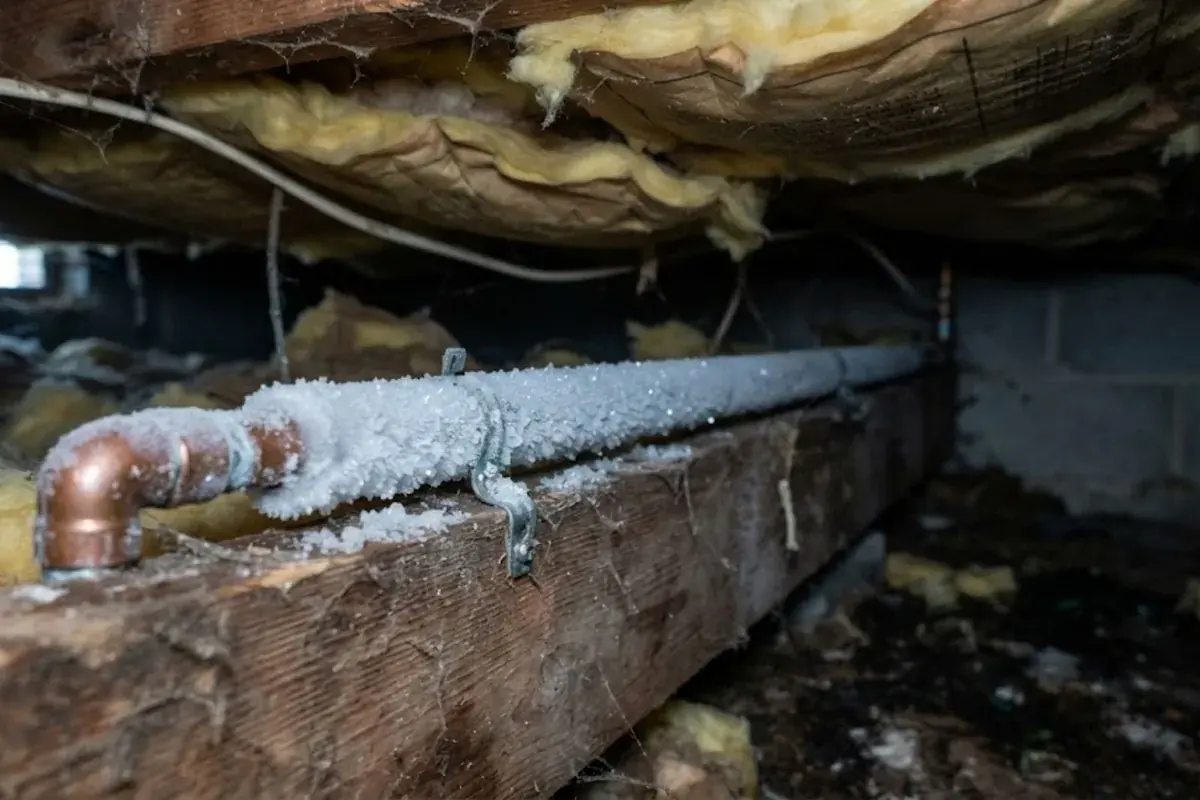
Frozen pipes and a tankless water heater are a worry because the unit itself can be protected while the lines around it are not. Many tankless heaters have built-in freeze protection that warms the heat exchanger when the temperature drops, but it only works while the unit has power and the vent and supply lines are inside conditioned space.
If a line near your heater has already frozen, shut off the water at the main, open the nearest faucet, and warm the pipe slowly with a hair dryer or warm towels. Never use an open flame. This guide covers prevention, thawing, and when a split pipe turns into a job for a licensed plumber.
Pipe insulation and any rerouting should follow manufacturer guidelines and the California Plumbing Code, which is based on the Uniform Plumbing Code (UPC).
If a line is frozen right now
Work in this order. Slow and steady beats fast and risky.
- Shut off the main water valve so a split pipe cannot flood the house when it thaws.
- Open the faucet nearest the frozen line, so melting water and pressure have a place to go.
- Turn off the tankless heater at its control panel and, if the manual allows, disconnect power so it does not fire against a blocked line.
- Warm the pipe gradually with a hair dryer, a heating pad, or towels soaked in warm water. Start at the faucet side and work toward the blockage.
- Never use a torch, a heat gun on high, or any open flame. Pipes, insulation, and gas appliances do not tolerate it.
- Once water flows, turn the supply back on slowly and look for leaks, wet drywall, or dripping at fittings.
How built-in freeze protection works
Most tankless heaters include a small electric heater or a routine that fires the burner when sensors detect a low temperature. This keeps water inside the heat exchanger from freezing. It needs electricity, and some gas units need power for the fan and control board.
That makes a power outage the weak point. A long outage on a cold night can leave the unit unprotected. Also, freeze protection covers the unit, not the pipes leading to it, so supply lines running through an unheated garage or crawl space can still freeze.
The exposed parts people forget
Walk the system once before cold weather. These are the places trouble starts.
- Cold and hot supply lines in attics, garages, and crawl spaces.
- Condensate drain lines on condensing units, where trapped water can ice up.
- Vent and air-intake terminations that are blocked by ice or debris.
- Outdoor hose bibs and irrigation lines tied into the same supply.
- Isolation valves and service ports that hold standing water.
- Gas line and wall penetrations where cold air enters.
Insulation and small habits that help
Foam pipe sleeves
Slip-on insulation protects supply lines in cold spaces. It slows heat loss but does not make a pipe freeze-proof.
Seal air leaks
Gaps around pipe penetrations let cold air blast a line. Seal them with caulk or foam.
Keep the unit powered
Do not unplug the heater in winter, and consider a battery backup if outages are common.
Drip a faucet
On the coldest nights, a slow drip keeps water moving and relieves pressure in a line at risk.
Before you leave a cold house empty
If you travel and the house will go unheated, leave the heater plugged in and the thermostat set to a modest temperature. Freeze protection only helps while the unit has power, so an unplugged heater offers none.
For a long absence, consider shutting off the main, draining the lines, and draining the heater through its service ports. The tankless water heater manual will show which steps apply to your model.
Ask a neighbor to look in if the weather turns unusually cold. A quick walk past the garage and outdoor spigots can catch a problem before a thaw turns it into a flood.
Frozen line or split pipe: what to check
| What you see | Likely meaning | Action |
|---|---|---|
| No water at one fixture. | Frozen line | Thaw slowly, shut off main first. |
| Water stains or drips near pipe. | Split or cracked pipe. | Shut off main, call a plumber. |
| Unit shows flow or temperature error. | Frozen inlet or heat exchanger. | Turn off and call. |
| Ice at vent or intake. | Blocked termination | Clear carefully, then restart. |
| Hissing or sudden flow after thaw. | Pipe burst | Shut off main, call now. |
| Everything flows but pressure is low. | Partial blockage | Wait, then recheck. |
A pipe can split without leaking until it thaws, so check every thawed section.
When a burst needs a plumber
If water is spraying or soaking a wall, close the main shutoff and call. Our 24/7 emergency line takes calls at night and on weekends, and licensed plumbers can repair the split section. See burst pipe repair for what that work involves, or leak detection if you suspect water behind a wall.
Keep people away from wet areas near outlets and the electrical panel. If you cannot reach the main shutoff, call us and the utility.
What drives the repair cost
The price depends on how many sections split, whether the pipe is copper, PEX, or something else, how much drywall must be opened, and how hard the line is to reach. Water damage cleanup is often a separate cost.
Many homeowner policies cover sudden water damage but not slow leaks or the failed pipe itself, so read your policy and ask your insurer. Call for a clear price before work starts.
Lafayette note: mild winters hide the risk
Lafayette has a Mediterranean climate, with dry summers and wet winters, so hard freezes are not routine here. That is exactly why unprotected exterior lines get overlooked. A bare hose bib, an uninsulated attic line, or an exposed vent that never needed protection before can fail on the rare cold night.
The practical move is to treat freeze prep as a short fall checklist rather than a daily worry. Check power to the heater, cover outdoor spigots, and insulate lines in garages and crawl spaces. If a neighbor in Orinda or Walnut Creek mentions a frozen line, the same steps apply.
For work on a tankless heater itself, the City of Lafayette permit page lists water heater repair, replacement or installation at single-family homes as exempt from a building permit. For anything else, ask the Lafayette building department.
Freeze questions from Lafayette homeowners
Many models have built-in freeze protection, but it needs power and only covers the unit.
Supply lines, vents, and drains outside the unit still need insulation.
No. Open flame and high heat can damage pipes, ignite nearby materials, and are dangerous around gas appliances.
Use a hair dryer or warm towels and thaw slowly.
Not often, since Lafayette has a Mediterranean climate with dry summers and wet winters. That is why unprotected exterior lines get overlooked.
A rare cold night can still catch an uninsulated line.
Check the main valve, then see whether one fixture or the whole house is affected. If one line is frozen, open its faucet and thaw it slowly.
If a pipe is split, shut off the main and call.
If water is flowing or soaking drywall, yes. Close the main and call our 24/7 emergency line.
Ask about same-day appointments when available for non-urgent follow-up.
Yes, turn it off at the panel until the line is clear and you have checked for leaks.
If the unit shows an error after thawing, call a licensed plumber.
Still unsure what you are dealing with? Call the 24/7 line and describe it to a dispatcher.
Call (855) 575-2890