
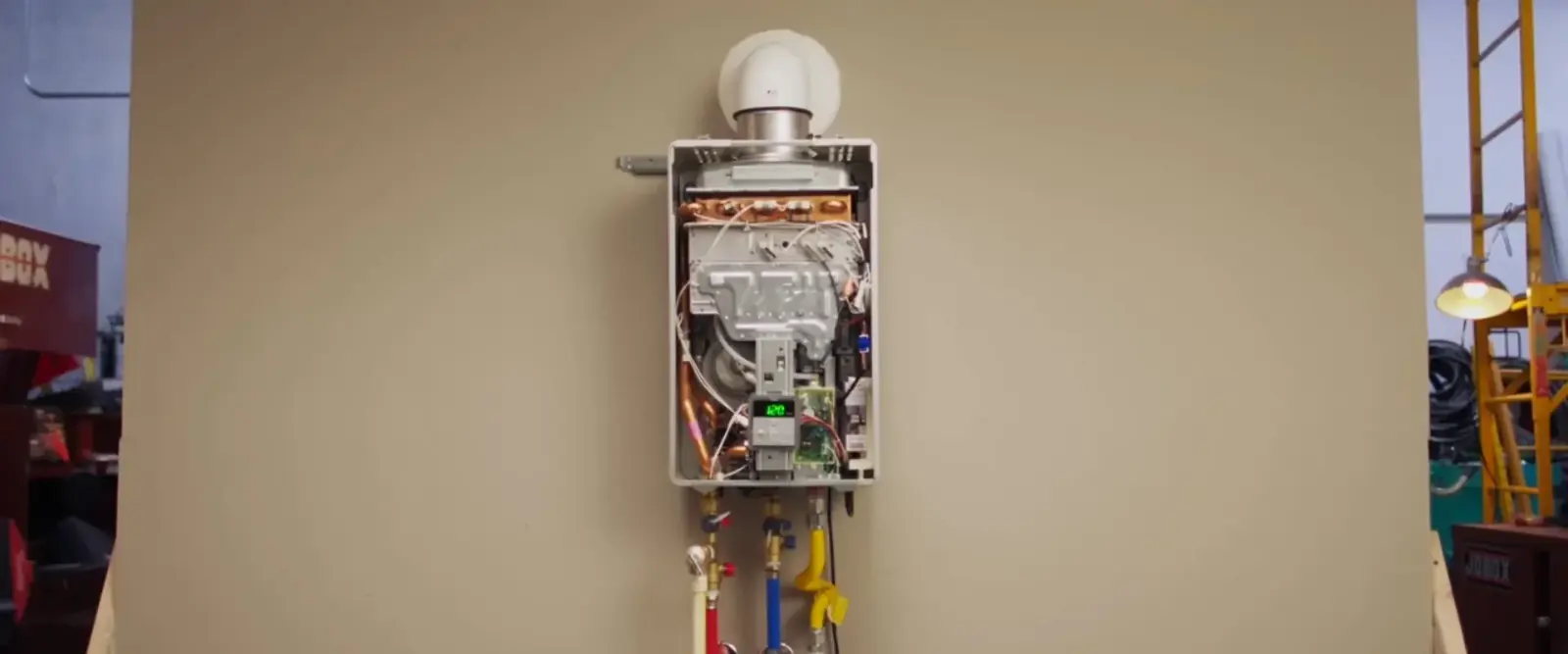
Does a tankless water heater have an anode rod? Generally no. A tankless unit has no storage tank to corrode, and the anode rod exists to protect that steel tank. Storage tank heaters do have one, and it is the main reason a tank lasts as long as it does.
If you searched this in Lafayette, you probably have one of two situations. Either you are shopping and wondering about upkeep, or you own a tank heater and found a hex head on top that someone called a rod. This page covers both, plus what actually guards a tankless unit and how the maintenance compares.
One caution before we go further. A few specialty or hybrid designs have components with their own protection, so check your model's manual if you are unsure. Follow the water heater manufacturer's guidelines for rod replacement, since removing the wrong part can void the warranty.
What an anode rod actually does
Inside a tank heater, a rod made of magnesium or aluminum hangs in the water. Because those metals corrode more easily than steel, the rod gives up its material first. The tank wall, which is the part you cannot cheaply replace, stays intact longer.
Plumbers call this a sacrificial anode. When the rod is eaten down to a thin wire, the tank starts to rust instead, and a leak is only a matter of time. That is why a quick look at the rod is one of the best maintenance habits for a tank heater.
Most tank heaters carry one rod, and some carry two. A second rod sits in the outlet fitting or is combined with the hot water pipe nipple. If you cannot find a hex head on top, look at the manual before you start unscrewing fittings.
A powered anode is a variation sold as an upgrade for tanks. It uses a small electric current instead of a metal that wears away. It is not common, and a plumber can tell you whether it makes sense for your tank.
What protects a tankless heat exchanger instead
Without a tank, a tankless unit relies on different materials and habits.
Corrosion-resistant metal
The heat exchanger is typically stainless steel or copper, chosen to handle hot water flow.
Water inlet filter
A small screen catches grit before it reaches the exchanger. Cleaning it is routine care.
Descaling
Flushing removes mineral buildup that would otherwise insulate and stress the metal.
Venting and condensate care
Condensing models drain acidic condensate. Keeping that drain clear protects the unit.
Tank versus tankless maintenance at a glance
| Task | Tank heater | Tankless heater |
|---|---|---|
| Anode rod | Yes, inspect and replace. | Generally none |
| Flushing | Drain sediment from the tank. | Descale heat exchanger. |
| Filter | None on most. | Clean inlet screen. |
| Relief valve | Test T&P valve. | Check per manual. |
| Earthquake bracing | Required straps | Wall mount, no straps. |
| Who can do it. | Handy owner or plumber. | Owner for filter, plumber for gas. |
Both types last longer with attention, and neither rewards neglect.
Inspecting and replacing a tank heater rod
If you own a tank heater, this is the job that matters most. Check the manual first, since some tanks have a combination outlet rod.
- Turn off the power at the breaker or set the gas control to pilot, and close the cold water inlet.
- Open a hot faucet in the house and attach a hose to the drain valve. Drain a few gallons so the water level drops below the rod's port.
- Use a 1 1/16-inch socket and a long breaker bar to loosen the rod's hex head on top of the tank. The first turn can be stiff.
- Lift the rod out. If it is thin, pitted, or the core wire shows, replace it.
- Wrap the new rod's threads with plumber's tape, thread it in, and tighten firmly.
- Refill the tank with the hot faucet open, check for leaks, then restore power or gas.
When replacing the rod stops making sense
A new rod cannot save a tank that has already corroded through or that is leaking at the seams. If rusty water, wet insulation, or puddles show up, swapping a rod will not fix it.
At that point the right move is a conversation about water heater replacement, and a licensed plumber can tell you whether a tank or a tankless unit fits your home.
Cost factors and when to call
The price of a rod swap depends on access, the style of rod, and whether the old one has seized in place. Tanks in tight closets or on platforms take longer. Corroded fittings sometimes need replacing at the same time.
If you would rather not wrestle a breaker bar, our licensed and insured plumbers handle it as part of a water heater repair visit. Call for a clear price before work starts.
Signs your rod may already be spent
None of these proves the rod is gone, but each is a reason to look.
- A rotten-egg smell from hot water only.
- Rust-colored or metallic-tasting hot water.
- Popping or rumbling as sediment bakes on the tank floor.
- A tank that has never had the rod checked and is well into its life.
- Small moisture rings around the base or fittings.
Lafayette note: water chemistry and earthquake bracing
EBMUD reports Lafayette treatment plant water at 16 mg/L hardness (about 0.9 grains per gallon) with a pH near 9.0. That is very soft, mildly alkaline water, so mineral scale builds slowly. For a tank heater it means sediment is usually light, but the rod still sacrifices itself, so inspection by the manufacturer's schedule is still sensible. Check the EBMUD water quality report for current figures.
California Health and Safety Code section 19211 requires water heaters to be braced against earthquake movement, so a tank heater needs proper straps whenever you service or move it. Tankless units hang on the wall and use different mounting. Either way, the work should follow the California Plumbing Code, which is Title 24, Part 5.
On permits, the City of Lafayette permit page lists water heater repair, replacement, or installation at single-family homes as exempt from a building permit. For anything beyond that, ask the Lafayette building department. Neighbors comparing notes in Walnut Creek or Pleasant Hill should ask their own city building department.
Anode rod questions we hear from Lafayette homeowners
Generally no. A tankless heater has no storage tank, so there is no steel vessel for a rod to protect.
The heat exchanger relies on corrosion-resistant metal, a clean inlet filter, and periodic descaling instead.
Follow the manufacturer's schedule, and look at it sooner if your hot water smells or tastes off.
A common habit is a periodic inspection, with replacement once the rod is thin or pitted.
It can in some conditions, because soft water is more aggressive toward the rod than hard water is.
That is a reason to inspect rather than guess. In Lafayette, very soft EBMUD water means scale is low, but the rod still needs checking.
You can, but the rod is cheap protection compared with a replacement and any water damage from a leaking tank.
If your tank is old and rusting, replacement is the honest answer.
The City of Lafayette lists water heater repair, replacement and installation at single-family homes as exempt from a building permit.
For other work, ask the Lafayette building department.
Yes. Our licensed plumbers can inspect the rod, test the relief valve, and tell you honestly whether to repair or replace.
Call for a clear price before work starts.
Still unsure what you are dealing with? Call the 24/7 line and describe it to a dispatcher.
Call (855) 575-2890